Whitepaper

Verified Is Not the Same as Trustworthy

Synthetic and stolen identities are built to pass your checks. Intent is what gives them away.

Identity proofing, background checks and MFA confirm the credentials were valid. They don't tell you who is actually in the session or what they are trying to do. This white paper, built on the Coalition Against Insurance Fraud's 2026 report, shows where synthetic and stolen identities slip through and how carriers verify intent, not just identity.

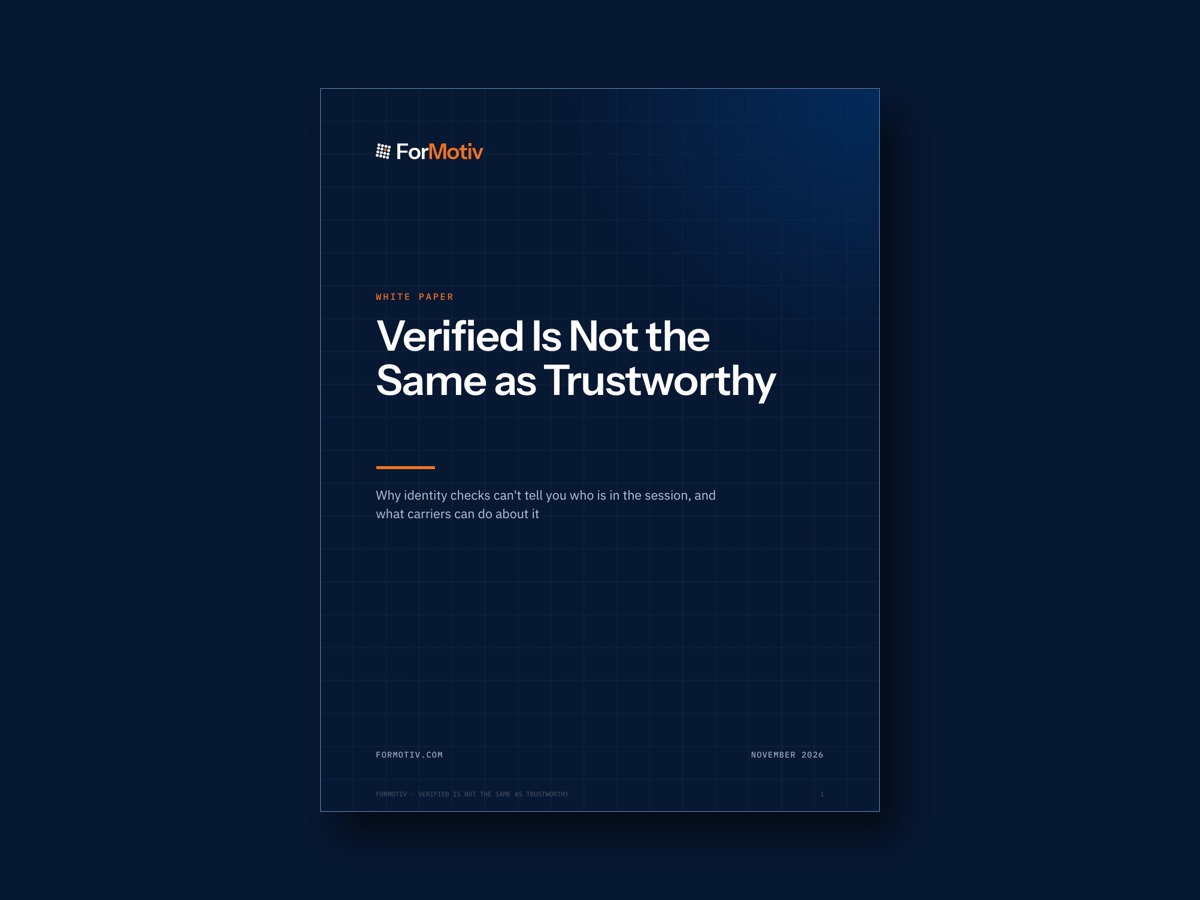
Cover of the ForMotiv white paper Verified Is Not the Same as Trustworthy

What’s inside this white paper

  • Why synthetic and stolen identities are designed to pass identity proofing, background checks, MFA and automated claims rules
  • Where the fraud shows up across new business, servicing, claims, agents and employees, and the check it passes in each
  • What point-in-time controls confirm, and what they cannot tell you
  • Four principles for verifying intent, not just identity: Detect, Determine intent, Act
  • A nine-step playbook for SIU, claims, servicing and digital leaders
  • What changes as AI agents start carrying stolen credentials

Built on the Coalition Against Insurance Fraud’s 2026 report on synthetic and stolen identification, with ForMotiv’s view on how carriers close the gap between a passed check and a trustworthy session. 9 pages, PDF.

Prefer to read it online? Read the article version.

Trusted Across the Insurance Industry